1. The Deformation of Lobate Debris Aprons Revealed by Crater Morphologies in Tempe Terra, Mars.
LDAs are landforms found in the martian mid-latitudes and associated with the presence of past and present near-subsurface ice. LDAs show morphologies that indicate viscous deformation. It is suggested that these morphologies are the results of the flow of a mixture of ice and debris, which derived from the sensitivity of near-surface ice to fluctuations in climate conditions. LDAs are considered relicts of geologically recent (i.e., Late Amazonian), obliquity-driven ice ages . Therefore, LDAs hold the record of past climate conditions on Mars.
However, age constraints of LDA formation are characterized by large uncertainties due to their complex history of modification by viscous deformation, and degradation by erosion, and ice sublimation. Such complex history of deformation and modification is revealed by the extensive presence of surface patterns such as polygonal texture, which is interpreted as evidence of cyclical processes related to thermal contraction, sublimation, and freeze‐thaw of ice-rich material, and by the morphologies of craters on LDAs, which can reveal episodes of mantling (i.e., ice accumulation) or stabilization (i.e., cessation of apron degradation).
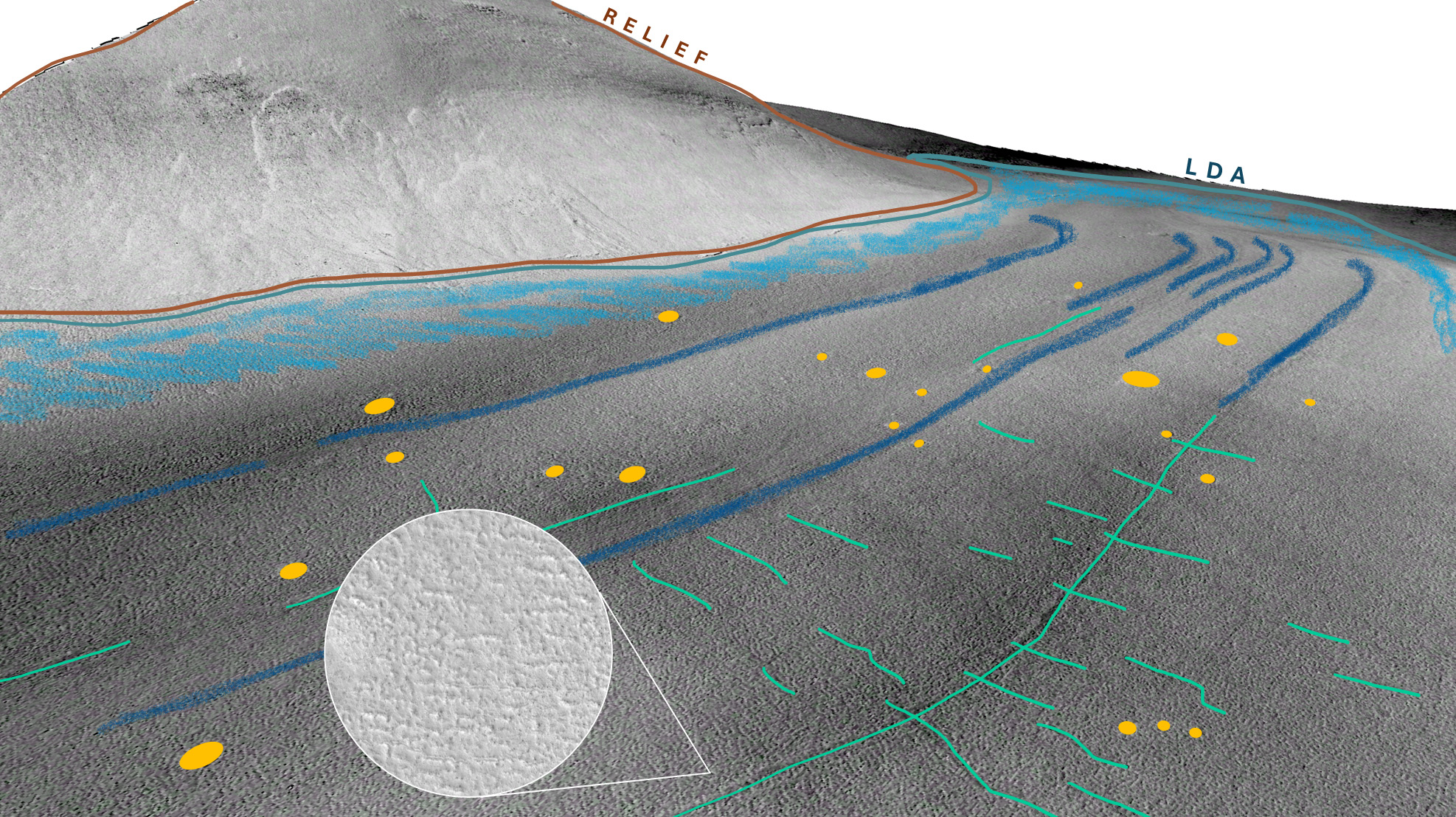
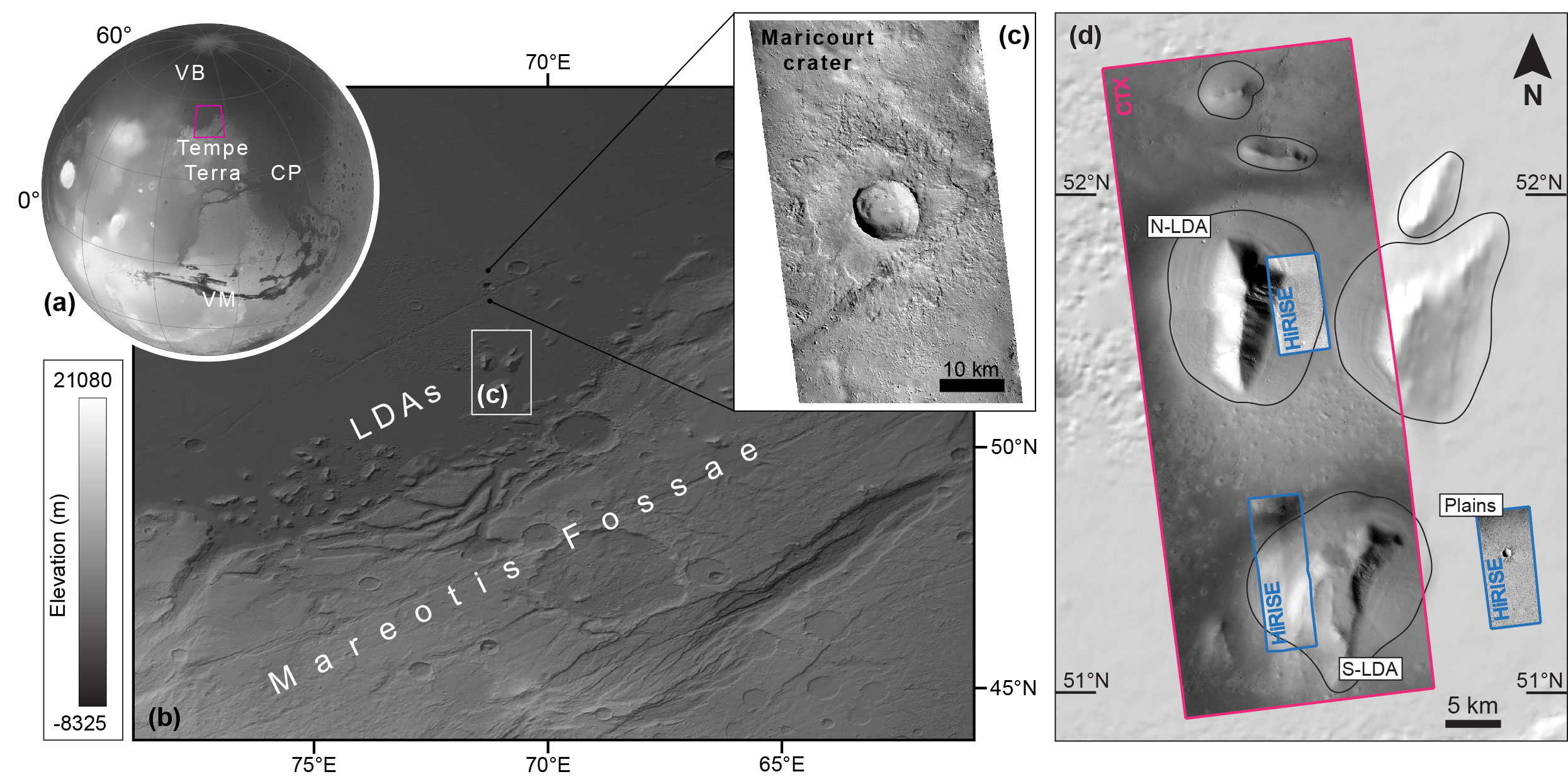
Our study area contains two lobate debris aprons (LDAs) in Tempe Terra, in the northern hemisphere of Mars. This region is ~100 km from Maricourt crater, which has a thermally-distinct ray system, which has been attributed a formation age of ~11 Ma. LDAs and adjacent terrains in Tempe Terra have likely been affected by secondary impact craters derived from the primary Maricourt crater. Therefore, this area represents an ideal site where to extract a range of morphometric parameters through which we aim to assess the downslope deformation of the secondary craters and discuss the results in terms of possible changes related to surface deformation processes and LDA flow.